
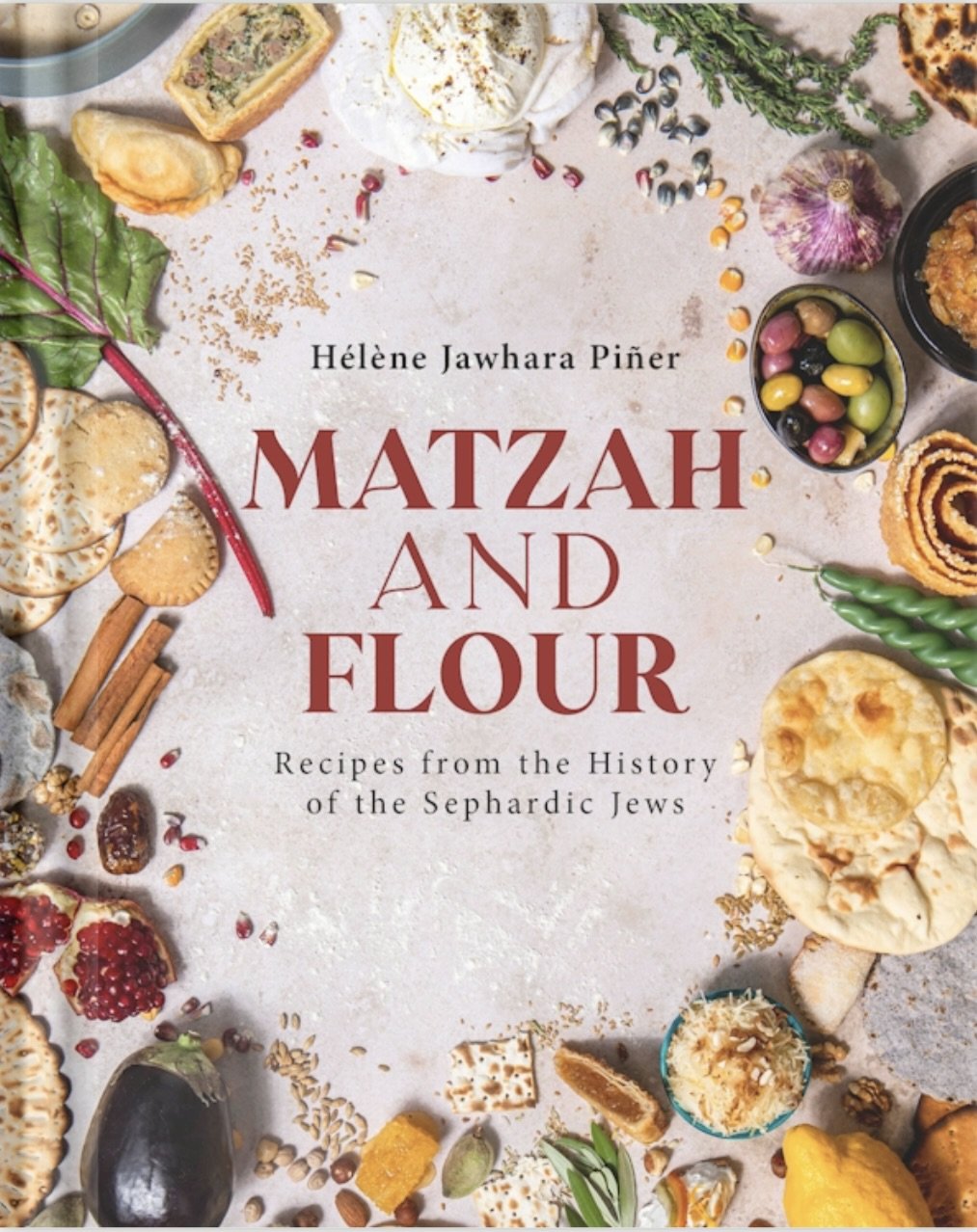
From Hélène Jawhara Piñer, Gourmand World Cookbook Award-winning author of Sephardi: Cooking the History, comes a collection of 125 meticulously crafted recipes showcasing the enduring flavors that define Sephardic culinary heritage.
Matzah and Flour: Recipes from the History of the Sephardic Jews offers a tantalizing exploration of the central role of matzah and flour in Sephardic cuisine. Journey through centuries of tradition as flour, from various grains like chickpea, corn, and barley, intertwines with cultural narratives and religious observance. Delve into the symbolism of matzah, from its origins in the Exodus story to its embodiment of resilience and identity. Each of this cookbook’s thoughtfully prepared recipes is a testament to the transformative power of flour in Sephardic culinary heritage. From savory delicacies to sweet delights, these timeless flavors have sustained Sephardic families through history. Matzah and Flour is a celebration of tradition, history, and the enduring legacy of Sephardic Jewish cuisine.
From Hélène Jawhara Piñer, Gourmand World Cookbook Award-winning author of Sephardi: Cooking the History, comes a collection of 125 meticulously crafted recipes showcasing the enduring flavors that define Sephardic culinary heritage.
Matzah and Flour: Recipes from the History of the Sephardic Jews offers a tantalizing exploration of the central role of matzah and flour in Sephardic cuisine. Journey through centuries of tradition as flour, from various grains like chickpea, corn, and barley, intertwines with cultural narratives and religious observance. Delve into the symbolism of matzah, from its origins in the Exodus story to its embodiment of resilience and identity. Each of this cookbook’s thoughtfully prepared recipes is a testament to the transformative power of flour in Sephardic culinary heritage. From savory delicacies to sweet delights, these timeless flavors have sustained Sephardic families through history. Matzah and Flour is a celebration of tradition, history, and the enduring legacy of Sephardic Jewish cuisine.